Introduction
Hacksaw blades are mission-critical components across US industries — from aerospace fabrication and military field operations to orthopedic surgery and precision metalwork. For procurement teams and industrial buyers, choosing a domestic manufacturer directly affects quality control, supply chain reliability, and compliance with strict defense and medical standards.
The US hacksaw blade manufacturing landscape spans large tool conglomerates and specialized niche producers, each serving distinct industries with very different performance needs. This guide covers the top 10 USA-based hacksaw blade manufacturers, evaluated on product range, application versatility, industry reputation, and manufacturing heritage — giving you the context to make faster, lower-risk sourcing decisions.
Key Takeaways
- The US hacksaw blade market includes both large-scale industrial manufacturers and specialized niche producers
- US-made blades deliver stronger quality control, reliable supply chains, and compliance with defense and medical procurement standards
- Key selection criteria include blade type and material, TPI range, and the manufacturer's track record in your target end-use sector
- Spyral Saw is the only US manufacturer of a 360° multi-directional wire saw blade — used by the US Military and aerospace industry for 30+ years
Hacksaw Blades in the US Market: A Quick Overview
A hacksaw blade is a thin, toothed cutting tool used in a tensioned frame or wire configuration to cut metals, plastics, composites, bone, ceramics, and other hard materials—distinct from circular or band saw blades. These precision tools serve as the workhorse of fabrication shops, maintenance facilities, and field operations across the country.
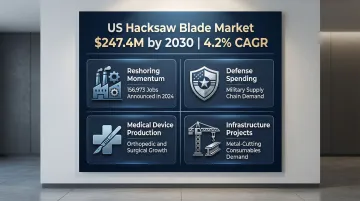
The USA hacksaw blades market is projected to reach approximately $247.4 million by 2030, expanding at a 4.2% CAGR. Several converging forces are driving that growth:
- Reshoring momentum: 156,973 manufacturing jobs were announced in 2024, the largest margin over foreign direct investment since tracking began
- Defense spending increases fueling demand for precision cutting tools in military supply chains
- Medical device production growth, particularly orthopedic and surgical applications
- Ongoing infrastructure projects requiring consistent access to metal-cutting consumables
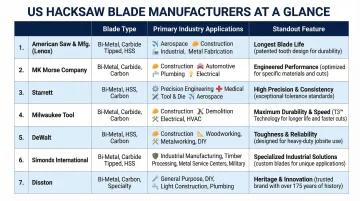
Within the US, manufacturers range from century-old precision tool makers to highly specialized producers of non-standard blade geometries. The companies below represent that full range — from high-volume commodity suppliers to niche manufacturers serving aerospace, defense, and surgical markets.
Top 10 Hacksaw Blade Manufacturers in the USA
These manufacturers were selected based on verified US manufacturing presence, product range, industry sectors served, and reputation for quality. Selection criteria included:
- Confirmed domestic manufacturing or assembly operations
- Documented product range across TPI options and blade types
- Verified track record across industrial, trade, or specialty markets
- Consistency of supply and distributor availability
1. Spyral Saw (Bestway Products Company)
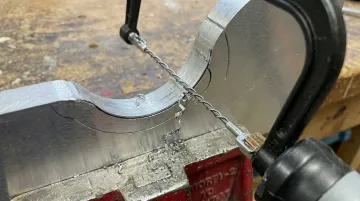
Background: Founded in 1946 as Tyler Manufacturing, Spyral Saw (operated by Bestway Products Company) has been the exclusive US manufacturer of the Spyral wire saw blade for over 50 years. This proprietary round-wire blade cuts in any direction and orientation, unlike any conventional flat hacksaw blade.
Stuart Gordon, who brought 25 years of aerospace manufacturing experience, acquired the business in 2004. Operations Manager Janet Page, daughter of founder Thomas Best, continues the family legacy alongside him.
Standout Factors: The Spyral blade's 360° tooth design sets it apart from every other blade on this list:
- Cuts contours, spirals, notches, and shapes impossible with flat blades
- Over 100,000 units purchased by the US Government across 30 years (NSN 5110-00-570-6896), proven with the Air Force and Marine Corps
- Best-selling surgical wire bone saw in the US, with 30+ years of aerospace use trimming titanium and stainless steel
- Blade ends twist off for use as a hole saw
- Does not readily cut skin, making it safe for field and medical handling
| Attribute | Details |
|---|---|
| Blade Type | Proprietary Spyral round wire saw blade (multi-directional) |
| Key Applications | Aerospace, military, surgical/medical, locksmithing, camping/survival, industrial |
| Notable Features | 360° cutting direction, safe-to-handle design, Made in USA, 50+ years of exclusive manufacturing |
2. L.S. Starrett Company
Background: Founded in 1880 and headquartered in Athol, Massachusetts, L.S. Starrett Company is a precision measurement and cutting tool manufacturer with a Saw Division in Mount Airy, North Carolina. The company manufactures tools in the US using globally sourced materials and maintains NVLAP accreditation (Lab Code 200038-0) demonstrating compliance with ISO/IEC 17025:2017 standards.
Standout Factors: Starrett's hacksaw blades feature precision-grade manufacturing in bi-metal high-speed steel Safe-Flex and Grey-Flex high carbon steel configurations. Available in 14, 18, 24, and 32 TPI, these blades serve precision fabrication, light metals, and plastics with the accuracy expected from a brand synonymous with precision measurement tools.
| Attribute | Details |
|---|---|
| Blade Type | Bi-metal high-speed steel, carbon steel |
| Key Applications | Precision fabrication, light metals, plastics |
| Notable Features | NVLAP accredited, 140+ year heritage, adherence to ISO/IEC 17025:2017 standards |
3. MK Morse Company
Background: Founded in 1963 and headquartered in Canton, Ohio, MK Morse operates an advanced manufacturing facility focused on power saw blades with hacksaw blades as a core offering.
Standout Factors: MK Morse manufactures bi-metal hacksaw blades designed to cut pipe, tubing, and machinable metals, available in 18 and 24 TPI. Their straight-body bi-metal construction serves HVAC, electrical, plumbing, construction, fabricators, and DIY markets. The Canton facility enables quick turnaround and broad product compatibility with industrial cutting equipment.
| Attribute | Details |
|---|---|
| Blade Type | Bi-metal |
| Key Applications | Construction, plumbing, HVAC, electrical, industrial cutting |
| Notable Features | US-based Canton facility, broad compatibility with standard frames |
4. Lenox Tools (Stanley Black & Decker)
Background: Founded in 1915 as American Saw and Manufacturing Company in East Longmeadow, Massachusetts, Lenox was acquired by Stanley Black & Decker in 2017. The company maintains a 500,000 sq. ft. ISO 9001-certified facility in East Longmeadow dedicated to blade manufacturing.
Standout Factors: Lenox produces T2 Technology bi-metal hacksaw blades in 10-inch and 12-inch lengths (18 and 24 TPI). Their high-tension hacksaw frame allows tension up to 50,000 PSI and stores up to 5 extra blades. Lenox is trusted among professional tradespeople in plumbing, HVAC, metalworking, and precision cutting applications.
| Attribute | Details |
|---|---|
| Blade Type | Bi-metal (T2 Technology), high-speed steel |
| Key Applications | Plumbing, HVAC, metalworking, professional trades |
| Notable Features | High-tension compatibility (up to 50,000 PSI), ISO 9001-certified facility, broad TPI range |
5. Irwin Tools (Stanley Black & Decker)
Background: Founded in 1885 in Martinsville, Ohio, Irwin Industrial Tools was acquired by Stanley Black & Decker in 2017. The brand targets professional tradesmen with a value-for-performance positioning.
Standout Factors: Irwin offers bi-metal hacksaw blades in 18, 24, and 32 TPI options, compatible with standard hacksaw frames. US manufacturing origin is not consistently documented across distributor listings for this line. The brand maintains wide retail availability and strong recognition among general trade and DIY users.
| Attribute | Details |
|---|---|
| Blade Type | Bi-metal |
| Key Applications | General trade, DIY, metalworking |
| Notable Features | Wide retail availability, professional tradesman focus, multi-TPI range |
6. Klein Tools
Background: Founded in 1857, Klein Tools is headquartered in Lincolnshire, Illinois, and maintains a strong commitment to American manufacturing. Their bi-metal hacksaw blades are explicitly "Made in USA".
Standout Factors: Klein's blades feature high-speed steel teeth fused to a carbon steel body, available in 12-inch lengths with 18, 24, and 32 TPI options. The company primarily serves electrical, telecommunications, construction, and mining industries with a loyal professional customer base that values durability and American-made quality.
| Attribute | Details |
|---|---|
| Blade Type | Bi-metal (HSS teeth fused to carbon steel body) |
| Key Applications | Electrical, construction, mechanical trades, telecommunications |
| Notable Features | American-owned since 1857, explicit "Made in USA" labeling, professional-grade build quality |
7. Diamond Saw Works, Inc. (Sterling)
Background: Founded in 1890 in Buffalo, NY, Diamond Saw Works operates its corporate headquarters and factory in Chaffee, NY. Sterling Saw Blades are made in the USA with global materials, utilizing regional weld centers in California, Oregon, and Texas to produce blades to exact specifications.
Standout Factors: Diamond Saw Works' Sterling Bi-Metal Hand Hacksaw Blades are shatterproof and cryogenically treated, available in 14, 18, 24, and 32 TPI, as well as varied pitches (18/14, 24/20). The distributed weld center network enables fast delivery of custom-length blades for industrial manufacturing and metal fabrication clients.
| Attribute | Details |
|---|---|
| Blade Type | Bi-metal, cryogenically treated, varied pitch options |
| Key Applications | Industrial manufacturing, metal fabrication |
| Notable Features | Regional US weld centers for rapid fulfillment, Sterling® brand heritage, consistent quality control |
8. Apex Tool Group (Crescent Nicholson)
Background: Apex Tool Group is headquartered in Huntersville, North Carolina, and operates over 20 plants globally manufacturing hand and power tools for industrial, vehicle service, aerospace, and construction markets.
Standout Factors: Under the Crescent Nicholson brand, Apex offers Bi-Metaloy hacksaw blades featuring a molybdenum alloy tool steel edge and tough, flexible high carbon steel backing, available in 18 and 24 TPI. The molybdenum alloy edge targets heavy industrial and precision manufacturing applications. Buyers should confirm US manufacturing origin for specific SKUs directly with Apex or their distributor before procurement.
| Attribute | Details |
|---|---|
| Blade Type | Bi-Metaloy (molybdenum alloy tool steel edge) |
| Key Applications | Heavy industrial, precision manufacturing |
| Notable Features | Broad brand portfolio, multi-channel distribution, molybdenum alloy blade geometry |
9. Stanley Black & Decker (Stanley-branded Blades)
Background: Stanley Black & Decker holds a 14% market share in the hand tool market and operates 30 facilities across 20 states. The Stanley brand offers hacksaw blades distinct from their Lenox and Irwin portfolio.
Standout Factors: Stanley-branded hacksaw blades include FatMax bi-metal and high carbon steel blades in 18, 24, and 32 TPI. The brand serves both professional trades and DIY markets through the widest retail distribution network in the industry, with strong brand trust and multi-frame compatibility. Manufacturing origin varies by SKU; confirm with your distributor before placing bulk orders.
| Attribute | Details |
|---|---|
| Blade Type | Bi-metal (FatMax), high carbon steel |
| Key Applications | Construction, DIY, professional trades |
| Notable Features | Widest retail availability, strong brand trust, multi-frame compatibility |
10. Simonds International
Background: Founded in 1832 in Fitchburg, Massachusetts, Simonds International has deep roots in US saw manufacturing. In 1992, Simonds acquired Wespa, a manufacturer of carbon and bi-metal bandsaw and power hacksaw blades. In 2018, Simonds merged with Burton Saw to form Wood Fiber Holdings (now Burton Mill Solutions), pivoting its primary focus to the wood processing industry.
Standout Factors: Simonds maintains its Massachusetts heritage and historical expertise in metal-cutting saw blades. Buyers should confirm current hacksaw blade availability directly with Simonds before ordering, given the 2018 pivot toward wood processing.
| Attribute | Details |
|---|---|
| Blade Type | Carbon and bi-metal (historical) |
| Key Applications | Wood processing (current focus), historical metal cutting |
| Notable Features | 190+ year heritage, strategic pivot to wood processing in 2018 |
How We Selected These Manufacturers
Not every brand that claims US manufacturing actually produces blades domestically — and for procurement teams buying under the Buy American Act or sourcing for defense and medical applications, that distinction is critical. The manufacturers on this list were evaluated against a consistent set of criteria to separate genuine domestic producers from distribution-only operations.
Each was assessed on:
- Verified US manufacturing presence (not just US headquarters)
- Product range and blade type diversity across material categories
- Documented use in demanding sectors — aerospace, military, medical, and heavy industrial
- Brand longevity and operational track record
- Trust signals such as industry certifications and known client bases
Common Buyer Mistakes to Avoid
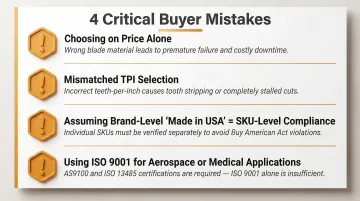
- Bi-metal blades resist heat and hold an edge far longer than carbon steel when cutting hardened metals — choosing on price alone leads to premature blade failure
- Mismatched TPI destroys blades faster than any other variable — 14 TPI on thin tubing strips teeth; 32 TPI on heavy beams stalls the cut entirely
- Buy American Act compliance requires SKU-level origin certificates, not just a "Made in USA" label on the brand's homepage — always verify at the product level
- Aerospace (AS9100) and medical (ISO 13485) applications demand sector-specific certification — general ISO 9001 compliance doesn't satisfy either requirement
Conclusion
Choosing the right hacksaw blade manufacturer isn't just about brand recognition. It comes down to matching blade type, material, and TPI to your specific application — and confirming the manufacturer has a proven track record in your industry. Military-spec compliance, medical-grade manufacturing, and aerospace validation all require different certifications and quality systems.
Before finalizing a supplier relationship, evaluate:
- Supply chain reliability and lead time consistency
- Domestic manufacturing credentials and Made-in-USA traceability
- Application-specific performance data and certifications
- Compliance documentation for defense, medical, or aerospace procurement
In regulated industries, traceability isn't a preference — it's a requirement.
If your application demands something conventional flat blades simply can't deliver, Spyral Saw's 360° wire saw blades occupy a category of their own. Manufactured exclusively by Bestway Products Company with over 50 years of proven use in aerospace, military, and surgical settings, they're built for cuts that standard hacksaw blades can't make. Contact Spyral Saw at sales@bestwayproductscompany.com or call 310-329-0600.
Frequently Asked Questions
Who makes the best hacksaw blades?
The "best" depends on application—bi-metal blades from manufacturers like Lenox or Starrett suit standard metalworking, while specialty applications (surgical, aerospace, multi-directional cutting) call for purpose-built options like Spyral Saw's wire blades. US-made options offer quality traceability and consistent performance.
What should I look for when choosing a hacksaw blade manufacturer in the USA?
Focus on verified US manufacturing, blade material (bi-metal, HSS, wire/carbide), TPI range, and industry certifications. Confirm the manufacturer has documented experience serving your target sector—aerospace, medical, defense, or industrial.
What is the difference between a flat hacksaw blade and a wire or spiral hacksaw blade?
Flat blades cut in one direction and are suited for straight cuts on metal, plastic, or pipe. Wire/spiral blades (like the Spyral blade) cut in any direction—360°—making them ideal for contour cuts, confined spaces, and applications where conventional blades cannot be positioned.
Are American-made hacksaw blades better than imported options?
US-made blades offer tighter quality control, stronger compliance with defense and medical procurement standards, and more reliable supply chains. For professional and industrial buyers, that consistency typically justifies the cost premium.
What hacksaw blade material is best for cutting hard metals?
High-speed steel (HSS) and bi-metal blades (carbon steel body + HSS teeth) are best for cutting hardened metals, as they resist the heat generated by friction and maintain sharpness longer than standard carbon steel blades.
Which industries in the USA rely most on specialty hacksaw blades?
Aerospace (composites, titanium, difficult alloys), military and defense (field use and manufacturing), medical/surgical (wire bone saws), and industrial manufacturing (pipe, rebar, conduit) are the primary sectors. Each demands specific blade materials, TPI ranges, and compliance documentation that standard off-the-shelf options rarely meet.